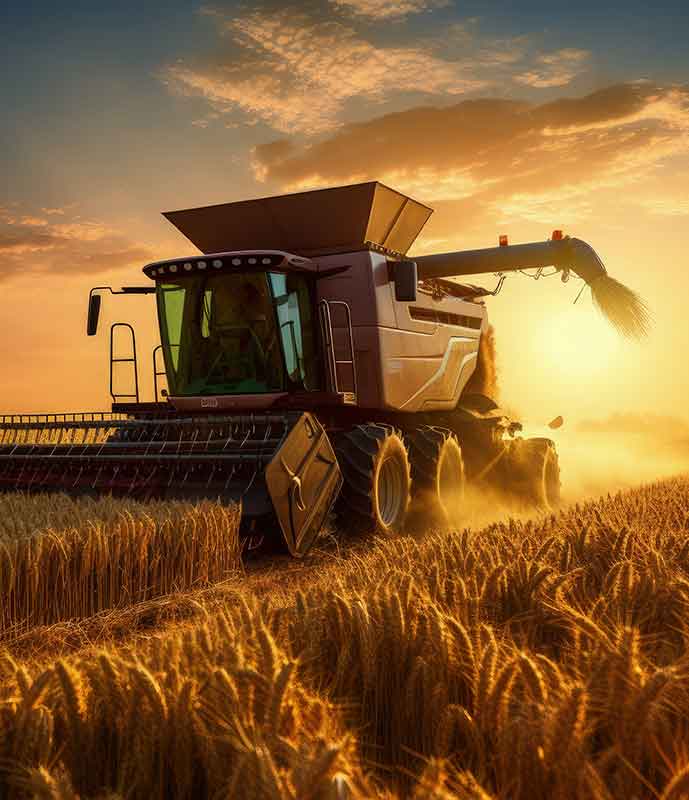
Every year, Pakistan produces millions of tons of wheat — and with the harvest comes a huge amount of leftover stalks, commonly known as wheat straw. What was once considered a low-value byproduct is now gaining recognition as a valuable export commodity worldwide. For exporters like Starland Enterprises, this shift represents a significant business opportunity: transforming agricultural residue into a sustainable, high-demand commodity.
Why Wheat Straw Matters — Globally and Locally
- Versatile utility — Wheat straw is used widely for livestock feed, bedding, mulching, composting, mushroom cultivation, bio-fuel, eco-friendly packaging, and even pulp and paper production. pakharvesters.com+2alghaniint.com+2
- Rising global demand — Many countries, especially in the Gulf, Middle East and parts of Asia, rely on imported straw for animal feed and industrial use, because local agriculture cannot meet this demand. farmpowerint.com+2saremco.com.pk+2
- Sustainable & eco-friendly alternative — Compared with synthetic materials or fuels, straw supports sustainable farming, reduces waste, and aligns with growing global interest in biodegradable, eco-conscious resources. alghaniint.com+1
Pakistan’s Strengths as a Wheat-Straw Exporter
- Large wheat production — abundant supply: As a top wheat-producing country, Pakistan naturally generates vast quantities of wheat straw annually, providing sufficient volume for both domestic needs and export markets. saremco.com.pk+2Starland Enterprises -+2
- Cost advantage: Lower production, labor and processing costs compared to many importing countries — which allows Pakistani straw to be offered at competitive prices globally. alghaniint.com+2pakarabintl.com+2
- Established export infrastructure: Major exporters — including Starland Enterprises — are already operating with modern processing, drying and baling facilities, and have access to key export hubs (like Karachi) for efficient shipments. Starland Enterprises -+2alghaniint.com+2
- Quality control & compliance for export markets: Proper cleaning, sun-drying, moisture control and packaging ensure wheat straw meets international standards for feed, bedding or industrial use. bilalenterprisespak.com+2pakagrofoods.com.pk+2
Typical Uses & Export Markets of Pakistani Wheat Straw
Pakistani wheat straw is exported for a variety of purposes, making it a flexible commodity for different buyer needs:
- Animal feed & bedding — For cattle, sheep, goats, camels; supplying farms and dairies overseas. organex.com.pk+2sharp-ages.com+2
- Agriculture & horticulture — Mulching, composting, soil protection, mushroom farming. pakharvesters.com+1
- Industrial uses — Raw material for paper/pulp industries, bio-material manufacturing, packaging, bio-fuel, and eco-friendly products. alghaniint.com+2The Express Tribune+2
As per recent trade data, exports under “cereal straw and husks” (which includes wheat straw) from Pakistan reached nearly 783,241,000 kg in 2023 — with major destination countries including United Arab Emirates, Kuwait, Qatar, Oman, and others. World Integrated Trade Solution
The Process: From Field Residue to Export-Ready Bales
Here’s a typical workflow followed by exporters like Starland Enterprises:
- Collection & harvesting — After wheat grains are harvested, straw stalks are collected from wheat fields.
- Drying & cleaning — Straw is sun-dried, cleaned to remove dust, seeds or impurities; moisture is reduced to safe levels for export.
- Baling & compression — Straw is compressed into bales (various weights: small 20–30 kg, medium, or large compressed bales) — to optimize storage and shipping. Starland Enterprises -+2alghaniint.com+2
- Quality control & testing — Nutritional parameters (fiber, protein content), contamination checks — to meet import country standards. Starland Enterprises -+1
- Container loading & shipping — Exporters load bales into containers (40-ft, 20-ft), ship via major ports (e.g. Karachi) to international buyers, mainly in the Middle East, Gulf and beyond. farmpowerint.com+2alghaniint.com+2
Because straw is relatively low-weight and bulky, compression and efficient containerization are especially important — a strength of exporters who invest in proper baling equipment. farmpowerint.com+1
Opportunities & Challenges for Wheat-Straw Exporters (and for Starland Enterprises)
Opportunities:
- Global shift toward sustainable, eco-friendly materials boosting demand for natural fiber, straw-based products.
- Growing livestock, dairy and poultry sectors in Gulf, Middle East, Africa — increasing demand for feed & bedding imports.
- Underutilized resource — straw is a byproduct, so production doesn’t require extra land or major inputs.
- Competitive cost structure — lower input costs in Pakistan make straw exports attractive vs. straw sourced from high-cost countries.
Challenges:
- Logistics & shipping costs: Straw is bulky, and freight cost per kg can be high if not efficiently compressed or containerized.
- Quality consistency: Buyers expect clean, dust-free, properly dried and moisture-controlled straw; quality lapses can harm reputation.
- Seasonal variability: Straw supply depends on wheat harvest; off-season availability may be limited.
- Market prices & competition: Price fluctuations or oversupply may depress margins; competition from straw exporters elsewhere.
- Regulatory / phytosanitary compliance: Export to certain countries may require strict certifications to meet import regulations.
Why Starland Enterprises is Well-positioned
Given the above context, Starland Enterprises already aligns strongly with best practices and market expectations:
- Offers premium-quality wheat straw with defined nutritional parameters (protein 6–8%, fiber 25–65%) — suitable for global livestock feed markets. Starland Enterprises
- Uses advanced machinery for processing, baling and uniform packaging — ensuring consistent quality and export readiness. Starland Enterprises
- Provides flexible packaging and bale sizes, meeting various buyer needs (small farms to bulk-importers) — increasing market appeal. Starland Enterprises -+1
- Has international export experience, leveraging Pakistan’s cost advantages and global demand — ready to tap into markets across Middle East, Africa, Asia and beyond. Starland Enterprises -+2alghaniint.com+2
Given rising global demand for sustainable and affordable livestock feed / raw material alternatives, weaving wheat straw into the export portfolio can significantly boost export revenues while promoting sustainable agriculture.
Recommendations & Strategic Considerations
- Target emerging markets where local forage production is limited (GCC countries, Middle East, Africa) — tailor bale size, packing and delivery terms accordingly.
- Emphasize quality & certification make sure straw is clean, dry, dust-free, pest-free, moisture-controlled; offer phytosanitary certificates or lab tests when required.
- Promote multiple uses not just livestock feed; market to buyers interested in composting, mulching, bio-packaging, or biofuel.
- Maintain supply consistency & storage facilities invest in good storage to supply straw even outside immediate harvest periods.
- Sustainability branding highlight wheat straw as a sustainable, eco-friendly alternative to synthetic feed or materials, leveraging global environmental trends.